

Phil Lynnott (Thin Lizzy)
Life and times

Alright, maybe this shade of green is too much, if the readers start frothing at the mouth, I’ll dial it back. But for now, let’s keep it radioactive and see who blinks first.
Christmas Day, 1985. A house in Cue that should’ve smelled like wrapping paper, cheap tinsel, and roast dinners instead carried the heavy, metallic air of something gone terribly wrong. Phil Lynott, Ireland’s black leather poet, the swaggering frontman who once prowled stages from Dublin to Detroit finally buckled. His body gave out. Somewhere in that same house, his two young daughters were moving through the holiday haze, unaware that the world had just tilted off its axis.
It was his mother, Philomena, who found him. The same woman who’d watched her golden boy rise from nothing, who’d seen him command crowds with that mirror scratched bass and the strut of a man who owned every neon lit night he walked through. She had no idea he’d been tangled up in heroin. None. To her, he was still the kid with the big grin and bigger dreams.
Eleven days later, the first black Irishman to front a major rock band, a hustler poet who wrote songs about men who never come home was gone. A legend undone not by the music, but by the shadows behind it.
A Christmas story with no carols, no miracles just the cold truth of a man who burned too bright for too long.
The official diagnosis read like a bureaucrat’s lullaby, pneumonia, heart failure, and septicemia. Clean, clinical, wrapped in the kind of medical language designed to keep the public calm. But anyone who’d been paying attention knew the truth was far uglier, the kind of truth that slinks around in the dark and refuses to look you in the eye.
This is the tale of the romantic, chaotic, and ultimately tragic life of the man they called The Black Rose, Phil Lynott. A myth stitched together from leather jackets, neon nights, and the kind of stage swagger that could make a whole city forget its troubles for three minutes at a time. A poet, a hustler, a dreamer who wrote songs about men who never came home, and then somehow became one of them.
The life, the legend, and the ruin of Phil Lynott, laid out like a crime scene under bad fluorescent lights.
Philip Paris Lynott blasted into the world on the 20th of August, 1949, in Hallam Hospital, West Bromwich—a place that greeted him with all the warmth of a tax audit. The world didn’t exactly roll out a red carpet. His mother, Philomena, was a young Dubliner who’d crossed the Irish Sea chasing work and a future; his father, Cecil Paris, was a Guyanese man she’d met in Birmingham. The relationship was brief—so brief it barely cast a shadow. By the time Cecil was transferred to London, Philomena realised she was pregnant and very much alone.
In the moral arithmetic of post‑war Britain, this was a social equation with no solution. A young Irish woman, unmarried, carrying a mixed‑race child—every direction she turned, the walls closed in a little tighter.
“Everywhere I turned,” Philomena later wrote, “I was reminded of the extent to which an unmarried Irish girl with a Black baby was an outcast.”
That was the starting line for the boy who would become The Black Rose—born into a world already sharpening its knives, and somehow determined to swagger straight through it anyway.
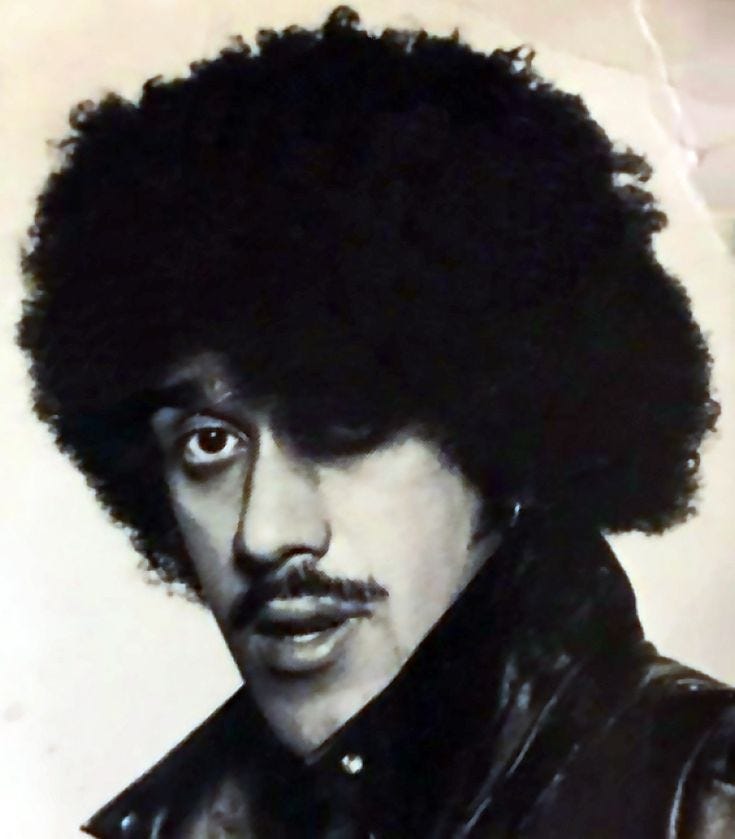
For a while, mother and son drifted through the strange purgatory of a home for unmarried mothers in Selly Park a place built to hide women like Philomena, not help them. Eventually she made her way to Manchester, carrying the kind of exhaustion only post‑war Britain could manufacture. And then she made a decision that would ricochet through both their lives in ways she could never have predicted.
When Philip was about eight, she sent him back across the water to live with her parents, Sarah and Frank, in Crumlin, a working‑class estate in South Dublin where the streets were tough, the humour was darker, and the world didn’t give you a thing unless you took it. It was a move made out of desperation, love, and the brutal arithmetic of survival.
That’s where the boy who would become Phil Lynott learned to stand tall, even when the world tried to shrink him. A kid caught between countries, identities, and expectations, already living the kind of origin story that would make most men fold, but somehow forged him into something mythic.
There wasn’t a whisper of rock ’n’ roll on the breeze in the place Philip now called home, no guitars, no neon, no promise of escape. Just the grey hum of Catholic Dublin, tight‑lipped and insular, a city that could sniff out difference like a bloodhound.
And there he was: a boy who didn’t look like anyone else for miles. Dark Philip in a white, inward‑facing world. He learned fast that being different was a kind of currency, and like all currency, it came with choices. You could spend it on shame, let the world shrink you down to size, or you could spend it on charm, swagger, and the kind of grin that disarms a room before it knows what hit it.
He chose charm. Of course he did. It was the only weapon that didn’t require permission.
Philip learned about Irish mythology in school the old gods, the warriors, the doomed lovers and to everyone’s surprise, the kid actually cared. While the rest of the class stared out the window dreaming of football or escape, he was soaking up legends like contraband. Nobody expected it, least of all the teachers.
But if Ireland wouldn’t claim him automatically, he’d claim the place by force, poetically, musically, defiantly. He’d take those myths, twist them into something electric, and fire them back at the world through a bass guitar. Irish legend on his lips, Dublin thunder in his stance, and a chip on his shoulder big enough to level a pub.
If the country didn’t see him as its own, he’d make damn sure it regretted the oversight.
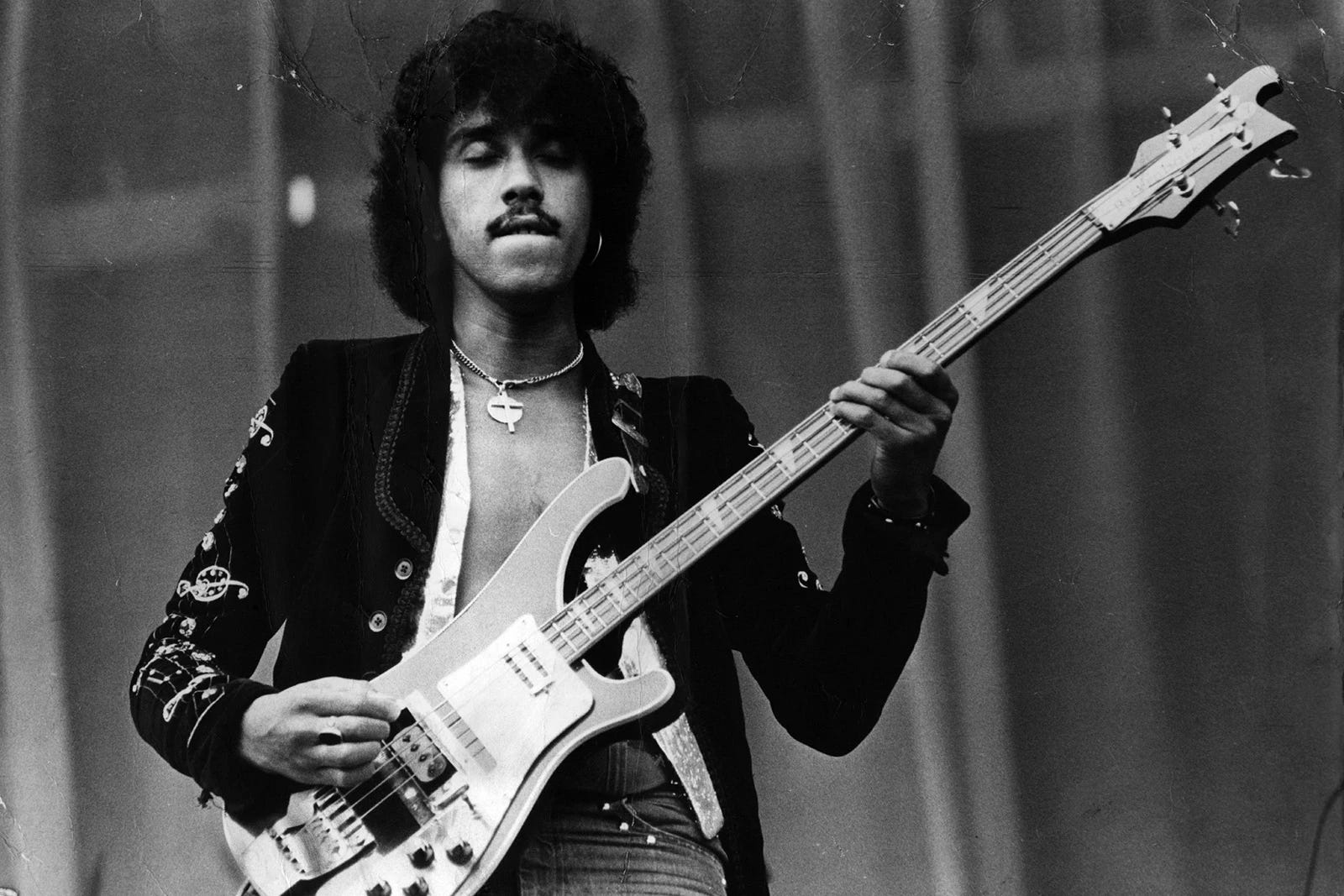
Years later, when some well‑meaning interrogator on RTÉ’s Late Late Show leaned in and asked Phil Lynott what it was like to be Black and Irish, as if he were some kind of exotic museum exhibit, he didn’t flinch. He just smiled that sly, dangerous smile and said, “It’s like a pint of Guinness.”
It was the perfect counterpunch. A line that compressed race, identity, and the whole absurd circus of Irishness into one personal image. You could take it a dozen ways, the dark body with the creamy head, the national treasure everyone claims to love but never fully understands, or simply a thing that goes down smooth while hiding a complicated history.
In one sentence, he dodged the trap, flipped the script, and reminded the country that he belonged to Ireland on his own terms, not theirs.
In another interview he dropped the politeness altogether and went straight for the jugular, “I’m Black, I’m Irish, and I’m a bastard. The music does the talking.”
That was Phil Lynott, no apologies, no qualifiers, no PR, approved varnish. Just the truth, delivered like a punch.
His first band was The Black Eagles, a name that sounded like it belonged on a pulp novel cover. Then came Kamasutra, God knows what they were thinking, and eventually Skid Row. Not the hair sprayed circus act with Sebastian Bach, but the original Dublin outfit where some madman introduced a fresh faced Gary Moore into the orbit.
Moore would haunt Lynott’s career like a brilliant, volatile ghost, appearing, disappearing, reappearing, always with that wild eyed genius that could either save the night or burn the whole operation down. For the next two decades, he drifted in and out of Phil’s life like a storm front, unpredictable and unforgettable.
Two men, two paths, colliding again and again in the great chaotic carnival of rock ’n’ roll.
Lynott’s time in Skid Row ended the way most early rock ventures do, abruptly, chaotically, and with every witness giving a different version of the crime. No one can quite agree why he left, only that one day he was in the band and the next he was gone, already plotting his next move like a man who refused to sit still long enough to be explained.
He threw himself into a new outfit called Orphanage. They gigged, they hustled, they scraped together enough noise to get noticed. And in 1969 they crossed paths with Eric Wrixon and Eric Bell, both escapees from Them, the Belfast outfit that had launched Van Morrison into the stratosphere. Suddenly the whole operation had teeth.
This new creature needed a name, and it got one, Thin Lizzy, or “Tin Lizzy” if you said it with the proper Irish twist. A nod to a Dandy comic character who was herself named after the Ford Model T. Rock ’n’ roll has always been built on nonsense, and this was the good kind.
Wrixon bailed within months, leaving behind a lean, hungry power trio, Lynott on bass and vocals, Eric Bell on guitar, and Brian Downey pounding the drums like he was trying to wake the dead. In 1970 they released their first single, “The Farmer,” a modest beginning for a band that would eventually roar loud enough to shake continents.
The fuse was lit. The explosion was coming.
Five hundred copies of “The Farmer” were pressed, and a pitiful 183 of them actually sold. Nobody was paying attention. Why would they? Early Thin Lizzy wasn’t the swaggering beast it would become, it was, by most accounts, Eric Bell’s band, and the rest were just orbiting bodies.
A roadie from the era swore Lynott barely got a look in, just another skinny kid on the edge of the stage. But Phil was watching. Always watching. Learning the angles, studying the crowd, figuring out how the whole mad circus worked. He was already plotting his escape from the sidelines, already calculating how to become the centre of gravity.
Because even then, before the leather, before the legend, before the myth of The Black Rose took root Phil Lynott knew he wasn’t built to play backup in anyone’s story.
Lynott taught himself the bass the way most outlaws learn their trade, by sheer force of will and a total disregard for the rulebook. He didn’t play with precision, he played with intent, with nerve, with that strange internal rhythm only he could hear. And sooner or later, even the seasoned pros standing beside him had to admit the kid had something dangerous in his hands.
Scott Gorham remembered it well, “He used to joke about being the worst bass player in the world, but he knew that wasn’t true. I’ve played with bass players who were amazed at what Phil could play while singing at the same time.”
A backhanded compliment delivered with awe, classic Lynott territory.
Then came Jailbreak, the record that blew the doors off and turned Thin Lizzy from a local curiosity into an international threat. At its centre was a song everyone on earth seems to know, “The Boys Are Back in Town.” It didn’t sound written, it sounded discovered, like it had always been lurking in some mythic barroom, waiting for the right band to drag it into daylight.
A swaggering anthem about loyalty, Saturday night bravado, and the quiet violence simmering under male camaraderie. The kind of song that makes you want to raise a glass, throw a punch, or disappear into the night with your best bad ideas.
Pure Lizzy. Pure Lynott. Pure chaos.
Sometime in the 1970s, not long after Vagabonds of the Western World hit the shelves, Lynott finally learned the identity of Cecil Paris, the ghost who’d vanished before he was even born. The details of how it happened are foggy, half remembered, and wrapped in the kind of sketchy circumstances that always seem to surround the man’s life.
A meeting was arranged brief, awkward, and reportedly somewhere near the BBC studios in London. One of Lynott’s bandmates who was there swore Phil didn’t want to be left alone with his father, as if the air between them was charged with something old and unfinished.
The encounter was short. No fireworks, no reconciliation, no Hollywood ending. And Lynott never spoke of it again. It slipped back into the shadows, just another ghost in a life already crowded with them.
Lynnott wrote two books of poetry, poetry, for God’s sake, which already set him apart from every other leather clad rock deity of his generation. While the rest were busy setting fire to hotel rooms or their own nervous systems, Phil was out there chiselling verse like some street corner bard with a death wish.
But the band around him had started to show visible cracks. Gary Moore. brilliant, combustible, allergic to chaos bailed out earlier, worn down and furious. In his place came Snowy White, a man who’d played with Pink Floyd and carried himself like a Swiss watch: precise, sober, and utterly unprepared for the circus he’d just walked into.
White later told Rolling Stone, “They were a great band, I liked Phil, but I didn’t really fit in properly.”
That’s the polite version. The studio, he said, was a madhouse hours evaporating while band members sat around getting stoned, the whole operation drifting like a ship with no captain and too much contraband.
“I’ve never taken drugs, ever,” White said. “Seeing people waste hours and hours when they were supposed to be recording made it all incomprehensible.” Missed calls, chemically enhanced mood swings, he never knew if the storms were real or induced. There was no way for an outsider to tell.
By August 1982, he’d had enough. He walked. And who could blame him? Thin Lizzy was still a great band but greatness and stability rarely share the same room for long.
Lynott’s drug use was now the central part of his existance, his marriage collapsed in 1984, buckled under the weight of escalating addiction, Heroin and alcohol had now become daily companions, ashen gaunt, with his swagger gone, it was all heading towards the christmas day collapse,
In the end, Phil Lynott walked the earth like a man built from contradictions, half myth, half wound, all swagger. A poet in leather, a street corner philosopher with a bass slung low, a dreamer who tried to outrun the shadows that trailed him from birth. He was the Black Rose, blooming in the cracks of a country that didn’t know what to make of him until it was too late.
He burned bright too bright for the machinery of rock ’n’ roll, too bright for the quiet rooms where doubt creeps in, too bright for the world that kept trying to put him in a smaller box than he was ever willing to fit. And like all the great ones, he paid for that brightness. Talent like his never comes tax free.
But here’s the truth, the real truth, the kind you feel in your ribs, Phil Lynott mattered. He mattered to the kids who didn’t fit, to the outsiders, to the dreamers, to anyone who ever felt the world pushing them to the margins. He mattered to Ireland, even when Ireland didn’t know how to claim him. He mattered to rock ’n’ roll, which still hasn’t produced another voice quite like his warm, dangerous, romantic, defiant.
And he mattered to the music. God, the music. Those songs still hit like a fist wrapped in velvet tender one second, explosive the next. They carry the fingerprints of a man who lived hard, loved harder, and wrote like he was trying to carve his name into the side of the moon.
Phil Lynott didn’t get the ending he deserved. But he left behind a legend that refuses to die, a catalogue that still rattles windows, and a ghost that still walks the streets of Dublin at closing time.
Raise a glass to him, not out of pity, but out of respect.
Because some men don’t fade.
Some men echo.
If you’ve made it this far through the madness, the myth, and the molten‑hot truth of Phil Lynott, then you’re clearly one of the sane ones, or at least the entertaining kind of insane. So do the right thing, subscribe, follow, and toss a coin into the hat via Buy Me a Coffee.
https://buymeacoffee.com/patrickmill
This kind of journalism doesn’t run on clean living and good intentions. It runs on caffeine, stubbornness, and the unshakeable belief that great stories deserve to be told by people who give a damn.
So fuel the machine. Keep the lights on. Keep the chaos coming.
Regards,
Patrick M.
THE most underrated band in rock history. Criminally so.
Aye, that is a great piece touching rock history. Well written.
Of course I remember Thin Lizzy, that is part of my teen youth when I started tackling with rock etc. Phil was a legend...