

The Quiet Rebellion
Why building in public is Dying (Pro Creativity)

Everyone keeps preaching radical openness like it’s the new gospel, spill your guts, bare your soul, turn your inner life into a public buffet for strangers gnawing on their phones. But that’s the great modern con, the soft skinned religion of people who’ve forgotten the value of a locked door. The truth, the real, feral truth, is that a person with boundaries is a dangerous animal. A person who keeps something for themselves is unpredictable, untamed, alive.
Radical openness is just another leash. The rebellion is silence. The rebellion is choosing what stays hidden.
People don’t just crave stories, they crave confirmation that their suspicions about the world aren’t madness. That the game is rigged, the deck is stacked, and the smiling bastards running the show have been dealing from under the table since before we were born. That’s why “the system is broken” content hits like a narcotic. It’s not negativity, it’s recognition. It’s the electric jolt of someone finally saying the quiet part with their teeth bared.
Readers don’t want polite wisdom. They want the truth with the safety rails ripped off. They want someone to drag the whole circus into the light and show them the gears grinding behind the curtain. High engagement writing isn’t about comfort, it’s about catharsis. It’s about telling people what they already feel in their bones but can’t articulate without sounding unhinged at a dinner party.
You give them that? You give them the sense that they’re not crazy, that the world really is a crooked carnival run by sleep deprived clowns and corporate vampires? They’ll follow you into the fire. They’ll read every word you write like it’s contraband smuggled across a border.
Because deep down, everyone wants the same thing,
Not peace. Not clarity.
Validation that their paranoia has a pulse.
And when you write with that feral honesty, when you tap into the collective suspicion simmering under the skin of modern life, your engagement doesn’t just rise. It detonates.
Evergreen writing is the real contraband of this digital wasteland, the stuff that doesn’t rot, doesn’t age, doesn’t get swallowed by the algorithmic meat grinder. People come back to it like pilgrims returning to a shrine because it speaks to something older and meaner than the news cycle. It taps the deep human itch, How do I survive this madhouse without losing my soul? That’s why series friendly pieces hit so hard. They give readers a map, not a perfect one, but a dirty, hand drawn chart of the terrain they already know is hostile.
You build a series around the truths that don’t expire, power, paranoia, rebellion, self preservation, the quiet war inside the human mind. Readers latch onto that because it feels like continuity in a world that’s constantly dissolving under their feet. They want chapters, arcs, breadcrumbs, a sense that someone out there is tracking the madness with enough clarity to turn it into a narrative. And when you deliver that, when you create a world they can step into again and again, you’re not just writing posts, you’re building a mythology.
Evergreen content is the long game. Series content is the trapdoor. Together, they turn casual readers into loyal ones, and loyal ones into the kind of cult following that will read every dispatch you send from the front lines. Because deep down, everyone wants to feel like they’re part of something unfolding, something bigger than a single post, something with teeth and trajectory.
Give them that, and they’ll follow you through every chapter you write.
Every good rebellion starts with a moment, a tiny, stupid, almost forgettable moment, when the world shows its hand. Mine hit on an ordinary Tuesday, standing in line at a deli that smelled like burnt beans and quiet desperation. The woman in front of me was spilling her entire life story into her phone, every trauma, every heartbreak, every unfiltered confession broadcast at full volume to a room of strangers who didn’t ask for any of it. Radical openness in the wild. A public autopsy of the soul.
And the worst part? People were listening. Nodding. Approving. As if this was normal. As if privacy was some outdated superstition, like smoking indoors or trusting politicians.
That’s when it hit me, the whole culture had snapped. We’d traded mystery for performance, boundaries for applause. Everyone bleeding out for engagement, begging to be witnessed, documented, validated. A society of open wounds pretending it’s healing.
That was the moment I realised the real rebellion wasn’t screaming your truth into the void. It was shutting the hell up. Keeping something for yourself. Guarding the last scraps of your inner world like contraband.
That’s where this series begins, with the quiet, dangerous idea that not everything needs to be shared, and the things you protect become the things that define you.
The sickness isn’t subtle. It’s everywhere, humming under the skin of modern life like a bad fluorescent light. We’ve built a culture where people treat their inner world like a clearance sale, everything must go, nothing held back, all emotions dumped onto the public square like roadkill on a hot highway. And the worst part? We applaud it. We call it “authenticity,” “vulnerability,” “being real,” when it’s really just mass emotional strip mining.
This is the diagnosis:
We’re a society addicted to exposure.
Not truth, exposure.
Not connection, performance.
People don’t share to be understood anymore. They share to be seen. To be witnessed. To prove they exist in a world that’s numbing them by the hour. Radical openness became the drug of choice because it’s cheap, fast, and instantly rewarded by strangers who don’t give a damn about you once they scroll past.
And the machine loves it. The machine feeds on it. Every confession, every meltdown, every trembling diary entry disguised as a “post” becomes fuel for the algorithmic furnace. The more you bleed, the brighter you burn. The brighter you burn, the faster you’re consumed.
That’s the rot at the core,
We traded privacy for applause.
We traded mystery for metrics.
We traded the sacred for the shareable.
And now we’re spiritually bankrupt, wandering through our own lives like tourists, narrating everything for an invisible audience that never claps loud enough.
The diagnosis is simple, brutal, and uncomfortably true,
We’re dying of overexposure.
And the cure sure as hell isn’t more sunlight.
This is the line in the sand,
You do not owe the world your insides.
Not your fears, not your wounds, not the sacred machinery that keeps you alive. The culture will try to pry it out of you, with applause, with algorithms, with the soft coercion of “authenticity.” But you are not a spectacle. You are not a confession booth for strangers. You are a sovereign territory.
The quiet rebellion begins when you stop performing your life and start living it. When you stop narrating every thought for an invisible audience and reclaim the silence that once belonged to you. When you realise the most radical act in a world addicted to exposure is to keep something untouched, unshared, unphotographed.
Privacy is not cowardice.
Mystery is not deceit.
Boundaries are not walls, they are borders, and every border marks a nation worth defending.
The manifesto is simple,
Guard your inner world like a smuggler guarding contraband.
Let your thoughts ferment in the dark where they grow teeth and meaning.
Let your soul be a locked room with no cameras, no commentary, no applause.
Because the moment you stop giving everything away, the moment you stop bleeding for the feed, you become dangerous again. You become unpredictable. You become whole.
And that, in this era of constant exposure, is the purest form of freedom left.
If overexposure is the disease, then creativity is the antidote, not the sanitized, productivity app version, but the real thing. The feral kind. The kind that lives in the cracks of your mind where no algorithm can crawl. Creativity is the last place the machine can’t fully map, the last territory that still belongs to you.
Because when you create, truly create, you’re not performing. You’re not pandering. You’re not bleeding for strangers. You’re building something from the private, unphotographed chambers of your own skull. And that act alone is rebellion. It’s a declaration that your inner world is not for sale.
Creativity forces you inward, back into the depths the culture keeps trying to drag you out of. It demands solitude, silence, friction, all the things the modern world treats like malfunction. It teaches you to sit with your own thoughts long enough for them to grow teeth, shape, meaning. It reconnects you with the parts of yourself that aren’t curated, optimized, or broadcast.
And here’s the secret the world doesn’t want you to remember,
When you create from the protected parts of yourself, you become untouchable.
Not because you’re hiding, but because you’re rooted. Because you’re drawing from a well no one else can access. Because your creativity becomes a fortress, a weapon, a compass.
The culture wants you transparent.
Creativity makes you opaque.
The culture wants you predictable.
Creativity makes you dangerous.
The culture wants you exposed.
Creativity gives you depth.
This is why the artists, the writers, the misfits, the ones who build worlds instead of broadcasting wounds, they survive the madness. They don’t escape it, they transform it. They turn the chaos into fuel, the noise into narrative, the pressure into propulsion.
Creativity is not a hobby.
It’s not a brand.
It’s not content.
It’s the last place you can go to stay human.
If something in you snarled awake while reading, then don’t drift back into the noise. Step further in. Join the rebellion while it’s still small enough to feel human, sharp enough to matter, and wild enough to stay honest.
Subscribe, read, follow, whatever you want to call it.
Just don’t walk away empty‑handed.
The door’s open.
The world outside is loud.
Come inside where the real work begins.
Regards,
Patrick M
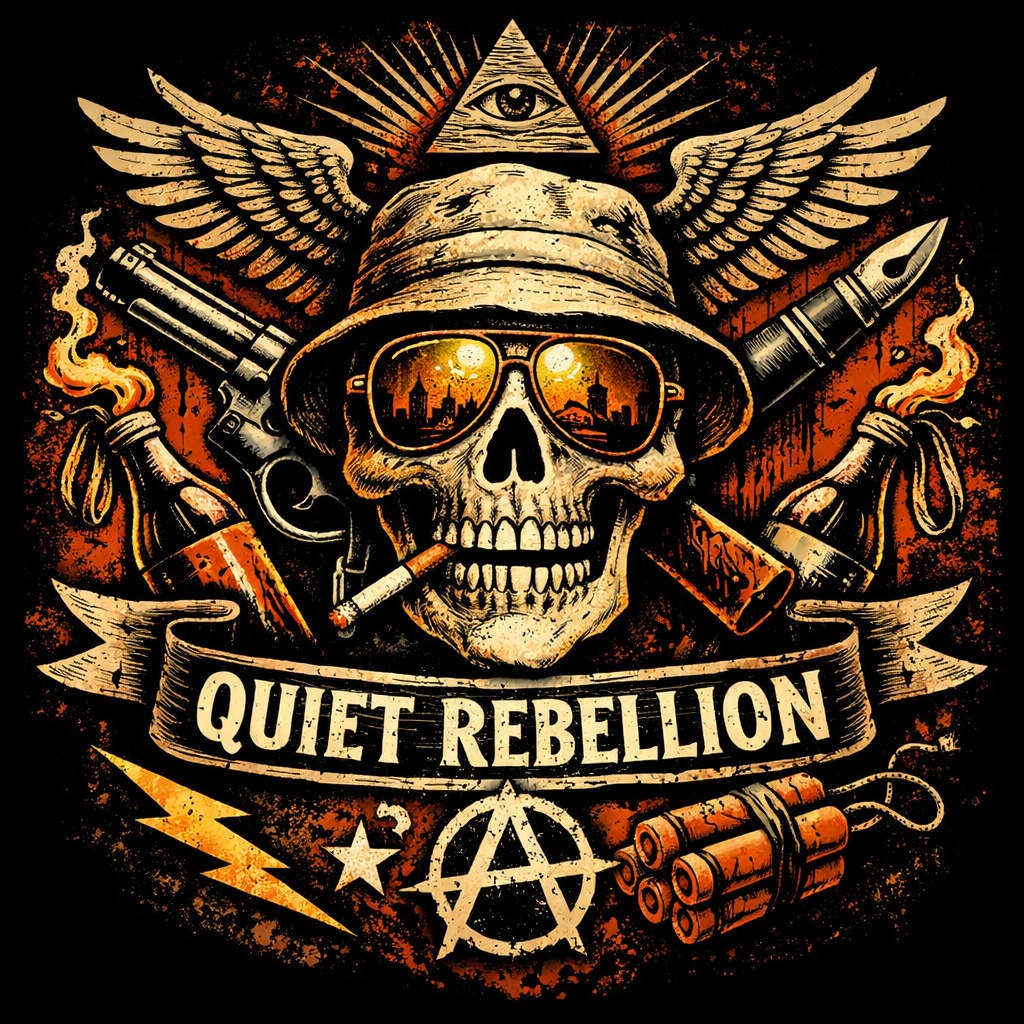
I think radical isn’t about openness, referring to political radicalism. It references a specific set (subset?) of positions generally thought to be extreme when compared to more middling ones.
I don’t believe in overexposure.
Every sacred thing in nature grows hidden first.
Seeds. Stars. Wounds. Revolutions.
The modern world wants people transparent because transparent people are easier to program.
I’d rather be understood slowly than consumed instantly.
Silence ain’t emptiness.
Silence is pressure.
Silence is preparation.
Silence is power learning its own name.
I’m with you Patrick💯